What cannot be delegated
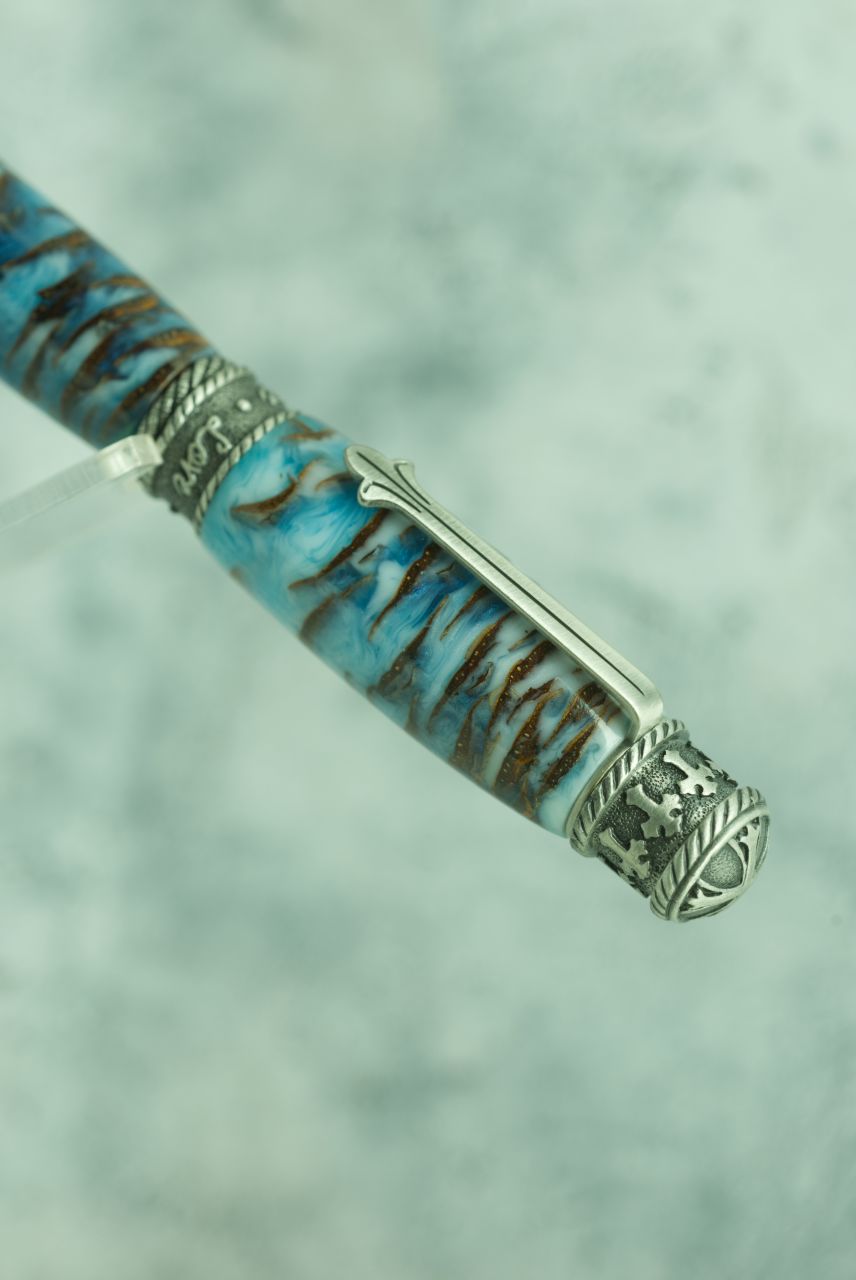
The lathe turns, the gouge bites, and it is the hand that decides where to stop. No machine knows when a curve is right. It takes time, that is the craft, and it is why no two pens come out quite the same.
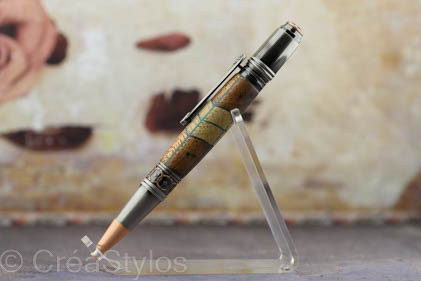
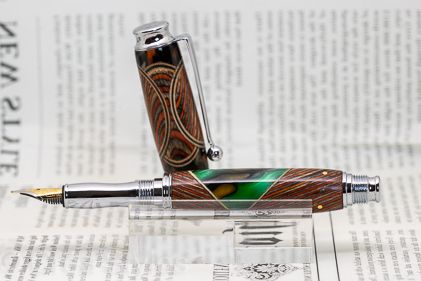
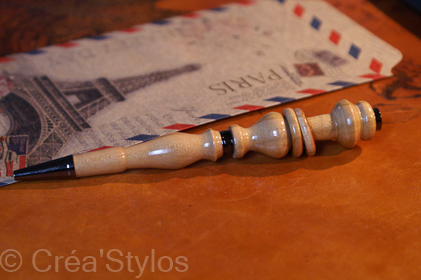
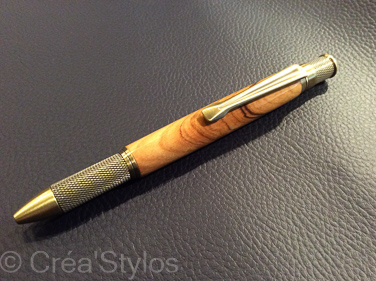
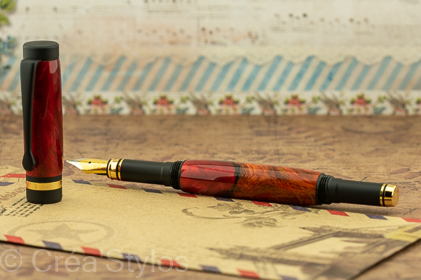
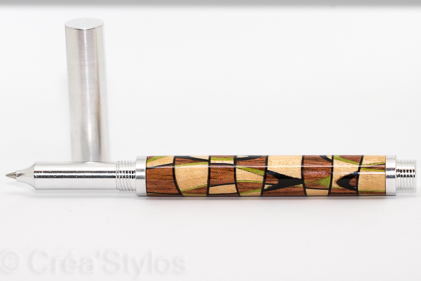
Here pens are made one at a time. No batches, no moulds : one species, one lathe, and the time it takes.
The lathe turns, the gouge bites, and it is the hand that decides where to stop. No machine knows when a curve is right. It takes time, that is the craft, and it is why no two pens come out quite the same.
Mahogany from Honduras, snakewood from Guyana, plane tree from the end of the village. Each species has its density, its smell under the sandpaper, its way of taking a finish. The workshop’s wood library holds 83 of them, all traced and catalogued.
Between the moment the wood is cut and the moment the pen is signed, several days go by — many of them spent doing nothing but waiting for a finish to cure. You cannot shorten that without it showing.
83 species catalogued at the workshop, from the plane tree down the road to woods that crossed an ocean. Each has its record, its Latin name and its origin.


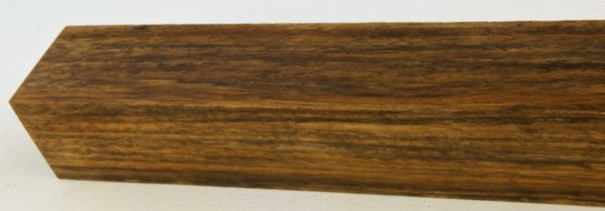

A species pulled from the wood library, picked for its grain and colour.
A few minutes, or three daysThe blank is cut to the length of the barrel and the cap.
10 minutesA hole down the axis, true to a tenth. Everything else depends on it.
15 minutesBrass tubes bonded with epoxy, then faced off flush.
One night to cureThe gouge roughs out, the scraper finishes. This is where the shape is born.
30 to 60 minutesSanded to 12000 grit, then cyanoacrylate or oil-wax depending on the wood.
2 hours and 24 h of restMechanism, nib, clip. Then the number and the certificate.
20 minutesEvery pen leaves with its certificate and its QR label. Scan it and you find the exact species, its origin, the date it was turned and the piece number.
None of this is decoration : it is the only way to know, ten years from now, what you are holding.